Running a business is stressful enough without worrying about a leaky roof, a broken lock, or an overgrown parking lot scaring away customers. Facility maintenance often gets pushed aside until something breaks, but that reactive approach almost always costs more time and money than a little planning upfront. Whether you own a small storefront or manage a multi-tenant building, a clear maintenance checklist helps you catch small problems before they become expensive emergencies. This guide walks through the areas every property owner should track, so you can protect your investment and keep your space safe, functional, and welcoming.
Making a Strong First Impression With Your Exterior

Customers form an opinion about your business before they even walk through the door, and the exterior of your building plays a huge role in that judgment. Studies on consumer behavior suggest it takes less than seven seconds for someone to decide whether a storefront looks trustworthy, and that snap judgment often happens before they even reach the entrance. Faded paint, peeling trim, or a broken sign can quietly signal neglect, even if everything inside is running smoothly.
A regular walk-around inspection helps catch these issues early: check for chipped exterior paint, cracked walkways, dirty windows, and overgrown landscaping that can make a building look abandoned. Pay close attention to your signage, since it’s often the first detail a potential customer notices from the road.
Investing in business sign services to repair burnt-out lighting, replace cracked or yellowed panels, and refresh worn lettering keeps your storefront looking current and easy to find, especially at night. Many owners schedule a professional sign inspection once or twice a year to catch electrical issues, loose fasteners, or fading before they become safety hazards or lasting eyesores.
Beyond signage, the condition of your walls and trim matters just as much. Hiring commercial painters every three to five years to touch up exterior surfaces protects the building from moisture damage and keeps colors from looking dull or outdated. Peeling paint or exposed wood can let water seep into siding and framing, leading to rot or mold that costs far more to fix than routine upkeep.
A fresh coat of paint is one of the more affordable upgrades a business owner can make, yet it has an outsized impact on curb appeal. Consider updating your color scheme to reflect current branding, and choose weather-resistant coatings suited to your climate, whether that means UV-resistant formulas for sunny regions or moisture-repellent options for areas with heavy rain or snow. Scheduling this work during off-peak seasons can also minimize disruption to customers and staff.
- Check exterior signage monthly for burnt-out bulbs, loose panels, or flickering LEDs, especially before evening hours when visibility matters most
- Inspect painted surfaces yearly for peeling, chalking, or cracking, paying close attention to areas exposed to direct sun or heavy foot traffic
- Clean glass storefronts and doors weekly to maintain visibility, using streak-free cleaner and checking for cracks or seal failures around the frames
- Replace faded or damaged awnings that affect brand appearance, and check hardware and fabric tension every few months to prevent sagging or tearing
- Sweep and pressure-wash walkways monthly to remove dirt, gum, and stains that can make the entrance look neglected
Watching Over the Roof and Building Structure
The roof is one of the most expensive components of any commercial property, and it is also one of the easiest to forget about since it is rarely in view. Small leaks can go unnoticed for months, quietly damaging insulation, ceiling tiles, or electrical systems before anyone spots a stain. Scheduling regular commercial roof inspections helps catch loose flashing, clogged drains, or worn membrane sections while repairs are still simple and inexpensive.
Weather takes a real toll on roofing materials, especially in climates with heavy rain, snow, or intense summer heat. A professional inspector can also check attic ventilation and insulation, both of which affect energy costs and indoor comfort. Catching problems twice a year, ideally in spring and fall, gives you time to plan repairs before extreme weather arrives.
- Look for ponding water after storms, which signals drainage issues
- Check seals around vents, skylights, and HVAC units
- Keep gutters and downspouts clear of debris
- Document roof age and material to plan for eventual replacement
Keeping Outdoor Areas Safe and Presentable

The grounds surrounding your building do more than look nice; they directly affect safety and liability. Overgrown shrubs can block sightlines near entrances, while cracked walkways create tripping hazards for customers and employees alike. Potholes in parking lots, uneven curbs, and poorly lit pathways add to the risk, especially during early morning or evening hours when visibility is low.
Routine commercial landscape maintenance keeps lawns trimmed, plants healthy, and walkways clear, which reduces the chance of accidents and keeps the property looking cared for throughout the year. A consistent schedule should include mowing every one to two weeks during growing season, seasonal pruning of trees and shrubs, and prompt removal of debris after storms.
Don’t overlook drainage and surface conditions. Standing water after rain can signal grading issues that erode walkways over time, and cracks wider than a quarter inch should be repaired before they become liability claims.
Seasonal tasks matter too. Salting and shoveling snow within a few hours of accumulation, checking exterior lighting fixtures monthly, and inspecting signage for visibility all help maintain a safe, professional appearance year-round.
Winter weather brings its own set of challenges, particularly in regions where snow and ice accumulate quickly. Arranging business snow removal ahead of the season, rather than scrambling during the first storm, ensures parking lots and entrances stay accessible and safe. Ideally, this means signing a contract by early fall that spells out trigger depths for plowing, response times, and whether salting or sanding is included.
A reliable snow removal plan also protects you from slip-and-fall claims that can arise when walkways are left icy or unshoveled. Beyond plowing the main lot, make sure your service covers high-traffic details like entrance ramps, handicap-accessible spaces, and stairwells, since these areas carry the greatest liability risk. Keeping a log of when treatments were applied can also serve as valuable documentation if an incident is ever disputed.
It’s worth having a backup plan in place as well, such as an on-call contractor or in-house team with shovels and ice melt, in case a major storm overwhelms your primary provider. Checking that walkway lighting still functions properly during shorter winter days adds another layer of safety for employees and customers arriving before sunrise or after dusk.
- Trim trees and hedges away from windows, signage, and walkways, aiming for at least 2-3 feet of clearance to prevent blocked sightlines and pest access
- Repair cracked pavement, potholes, or uneven curbs promptly—even a half-inch height difference can create a trip-and-fall liability
- Restripe faded parking lot lines and handicap markings at least once a year for visibility and ADA compliance
- Confirm snow removal contracts specify response times, salting frequency, and de-icing coverage for entrances and steps
- Inspect outdoor lighting monthly, replacing burnt-out bulbs and checking timers or sensors so pathways and lots stay well-lit after dark
- Clear gutters and downspouts seasonally to prevent water pooling near entrances or foundations
Prioritizing Cleanliness Inside the Building
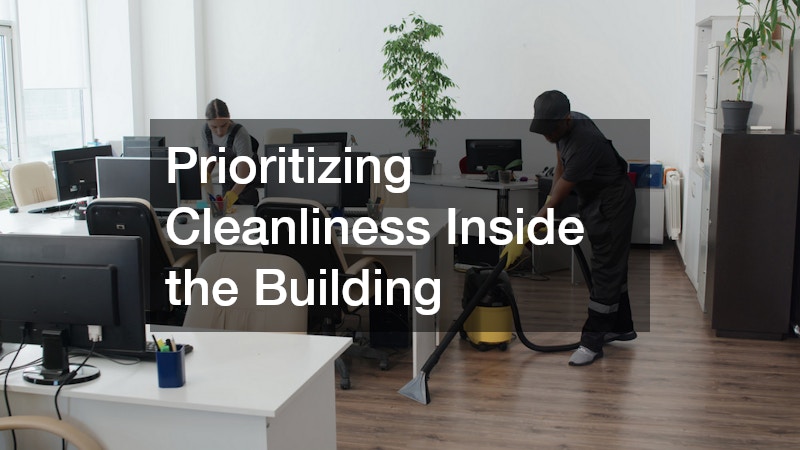
A clean interior does more than impress visitors; it protects the health of everyone who spends time in the building. Dust, allergens, and bacteria build up quickly in high-traffic areas like lobbies, restrooms, and break rooms. Partnering with reliable office cleaning services ensures floors, surfaces, and shared spaces are sanitized consistently, rather than relying on inconsistent in-house efforts that often get skipped during busy weeks.
Beyond general appearance, cleanliness affects employee productivity and morale. Workers tend to feel more comfortable and focused in a tidy environment, and fewer germs circulating means fewer sick days across your team. Setting a clear cleaning schedule, with specific tasks assigned to daily, weekly, and monthly intervals, keeps standards consistent even as staff or contractors change.
- Sanitize high-touch surfaces like door handles and light switches daily
- Deep clean carpets and upholstery on a quarterly basis
- Restock restroom supplies and check for plumbing issues weekly
- Empty and inspect trash and recycling bins to avoid odors
Designing a Workspace That Supports Productivity
The physical layout of a workplace has a direct effect on how comfortable and efficient employees feel throughout the day. Cramped desks, mismatched chairs, or outdated furniture can quietly contribute to fatigue and lower morale. Thoughtful office furnishing choices, including ergonomic chairs and adjustable desks, help reduce strain and support better posture during long workdays.
Furniture also needs regular upkeep, not just a one-time purchase. Loose screws, worn upholstery, or broken drawer slides should be repaired quickly before they become safety hazards. Reassessing your furniture layout every couple of years, especially as your team grows or your services change, keeps the workspace functional rather than cluttered.
- Inspect chairs and desks quarterly for stability and wear
- Replace furniture that no longer supports proper posture
- Arrange workstations to allow clear walking paths
- Consider flexible furniture that adapts to meetings or collaborative work
Strengthening Security for People and Property

Security is one of those areas that business owners often underestimate until an incident forces them to take it seriously. Modern access control systems allow you to manage who enters specific areas of your building, whether that means a keycard for employees, a mobile credential app, or a coded entry for storage rooms and server closets. Many systems also let you set time-based restrictions, so a warehouse worker’s badge might only function during scheduled shifts.
This kind of system also creates a digital record of entry times, which can be valuable if you ever need to investigate a security concern, a theft, or a workplace dispute. Beyond doors, consider pairing access control with surveillance cameras at entry points, loading docks, and cash-handling areas.
Don’t forget the basics, either: rekeying locks after employee turnover, testing alarm systems monthly, and maintaining clear sightlines in parking lots with adequate lighting all reduce risk significantly.
Cameras add another layer of protection, both as a deterrent and as a source of evidence if something does go wrong. Professional commercial surveillance camera installation ensures cameras are placed at key entry points, parking areas, loading docks, and cash-handling zones, with footage stored securely for later review. A well-planned system typically includes a mix of wide-angle exterior cameras and higher-resolution interior units focused on registers, safes, and storage rooms.
Storage and retention policies matter just as much as camera placement. Most businesses keep footage for 30 to 90 days depending on local regulations and insurance requirements, and cloud-based backups add an extra layer of security in case on-site equipment is damaged or tampered with. Make sure someone on staff knows how to pull and export footage quickly if law enforcement or your insurer requests it.
Testing your system regularly is just as important as installing it, since a camera that stopped recording months ago offers no protection at all. Schedule monthly checks to confirm lenses are clean, night vision functions properly, and storage drives aren’t full or corrupted. It’s also worth reviewing camera angles after any renovation or layout change, since shifted shelving or new equipment can easily create blind spots that go unnoticed until they’re needed most.
- Update access codes or keycards immediately when employees leave or change roles, not just during periodic reviews
- Position cameras to cover blind spots around entrances, loading areas, parking lots, and stairwells
- Store footage for a set retention period based on local regulations, typically 30 to 90 days depending on jurisdiction
- Schedule routine checks, at least monthly, to confirm cameras, locks, and alarm systems are functioning properly
- Test emergency exits and panic buttons to ensure they respond correctly during drills
- Keep a log of all security equipment inspections and repairs for accountability and compliance purposes
Protecting Your Business Financially
Even the best-maintained property can face unexpected damage from storms, accidents, or theft, which is why proper coverage matters as much as physical upkeep. Business insurance can help cover repair costs, liability claims, and lost income if your operations are interrupted by an unforeseen event. Reviewing your policy annually ensures it still matches the value of your building, equipment, and inventory as your business grows.
Many owners underestimate their coverage needs until they file a claim and realize a gap exists. It helps to sit down with your provider periodically to walk through recent renovations, new equipment, or changes in foot traffic that might affect your risk profile. Keeping detailed maintenance records also supports faster claims processing, since it demonstrates that the property was cared for responsibly.
- Review policy limits yearly against current property value
- Keep receipts and records for major repairs or upgrades
- Ask about coverage for weather-related damage and business interruption
- Confirm liability coverage extends to customer injuries on the property
Building a Realistic Maintenance Schedule
A checklist only works if it is actually followed, which means turning these tasks into a schedule rather than a vague list of good intentions. Breaking responsibilities into daily, weekly, monthly, and seasonal categories makes the workload feel manageable instead of overwhelming. Assigning specific tasks to specific people, whether that is an employee, a manager, or an outside vendor, removes the confusion of who is responsible for what.
Digital tools can simplify this process significantly. Many property owners use simple spreadsheets or maintenance apps to track completed tasks, upcoming inspections, and vendor contact information in one place. Reviewing the schedule quarterly allows you to adjust for seasonal needs, like adding snow removal in winter or extra landscaping visits in spring.
- List each task with an assigned frequency and responsible party
- Set reminders for seasonal work like roof checks or exterior painting
- Track vendor contracts and renewal dates in one shared document
- Review and update the schedule every quarter
Setting Aside a Realistic Maintenance Budget
Maintenance costs add up over the course of a year, and surprises are far easier to manage when you have planned for them in advance. Setting aside a dedicated maintenance fund, separate from your general operating budget, prevents small repairs from turning into financial stress. Many property owners aim to budget a percentage of their building’s value annually toward upkeep, adjusting based on the age and condition of the property.
It also helps to prioritize spending based on safety and function first, then appearance second. A broken lock or a roof leak deserves faster attention than a scuff on the lobby wall, even though both eventually need addressing. Reviewing your spending each year against actual repair costs helps you refine your budget so it becomes more accurate over time.
- Set aside a percentage of revenue specifically for facility upkeep
- Prioritize repairs that affect safety before cosmetic fixes
- Get multiple quotes for larger projects before committing
- Track annual maintenance spending to improve future budgeting
A well-maintained facility does not happen by accident; it comes from consistent attention to the details covered in this checklist. Start small if you need to, tackling one category at a time until you have a full schedule in place, and lean on trusted professionals for the tasks that require specialized expertise. The time and money you invest now in upkeep will pay off through fewer emergencies, safer conditions, and a property that reflects well on your business for years to come.