
The decision to expand your physical footprint is one of the most exciting milestones a business can reach. It signals that your revenue is growing, your team is expanding, and your market share is solidifying. However, the transition from outgrowing your current facility to successfully operating in a newly expanded space is fraught with logistical complexities. Expanding a business facility is vastly different from upgrading a residential property. It requires navigating strict zoning laws, adhering to complex building codes, and integrating specialized infrastructure that can handle industrial-scale demands.
Many business owners make the mistake of assuming a single general contractor can handle every nuance of a major facility addition. To avoid costly delays, code violations, and operational downtime, you must build a roster of highly specialized experts. The success of your project hinges on hiring the right professionals at the right time, from the initial structural planning to the final coat of paint. This comprehensive guide will walk you through the sequential steps of facility expansion, helping you identify exactly who to bring on board for structural planning, exterior upgrades, utility scaling, and final finishing.
Assess Your Blueprint and Set a Realistic Phase-One Budget

Before any dirt is moved or walls are torn down, a rigorous planning phase must take place. The foundation of a successful expansion is a realistic assessment of what your current property can actually support, both structurally and legally.
Map Out the Structural Feasibility Before Signing Contracts
The very first professionals you should consult are architects and structural engineers. These experts will help you determine if the land you own—or the lease you hold—can legally and physically support an addition. They will conduct soil tests, review municipal setback requirements, and analyze your current structural load limits.
During this feasibility phase, you must also establish a clear timeline that minimizes disruption to your ongoing daily operations. An expansion project can easily turn into a logistical nightmare if construction noise, dust, and utility shutoffs interfere with your ability to serve customers or manufacture products. Work with your planning team to create a phased approach, ensuring that critical business functions are isolated from active construction zones.
-
Conduct a thorough site survey: Understand your property lines, easements, and utility locations before drafting any blueprints.
-
Review local zoning ordinances: Ensure your intended use for the expanded space complies with municipal codes, parking ratios, and environmental regulations.
-
Establish a contingency budget: Unforeseen issues are inevitable in construction. Allocate at least fifteen to twenty percent of your total budget for unexpected structural surprises.
Define the Scope of Your Structural Changes
It is vital to distinguish between a simple cosmetic update and a full-scale structural overhaul. Moving a few non-load-bearing walls requires a vastly different skill set than pouring a new foundation and tying a steel-framed addition into an existing brick building.
When your expansion involves significant changes to the building’s envelope, footprint, or load-bearing elements, you need a specialized team. Hiring an experienced commercial remodeling firm to act as your primary project manager is crucial. They possess the necessary relationships with local inspectors and understand the complexities of bringing older structures up to modern building codes while seamlessly integrating the new square footage.
Protect Your Investment by Evaluating Top-Down Infrastructure
Once the structural plans are approved and the framing begins, your immediate focus must shift to the building envelope. The roof is your facility’s first line of defense against the elements, and expanding a building creates significant vulnerabilities that must be addressed by specialists.
Weatherproof the Seams of Your New Addition
One of the most notorious failure points in any building expansion is the tie-in point between the old structure and the new addition. If these seams are not perfectly integrated, you risk catastrophic water intrusion, compromised insulation, and structural rot.
The integration process requires specific expertise. Knowing the exact moment in the project timeline to bring in a specialized commercial roofer is essential; they should ideally consult on the project before the new roof deck is even finalized. They will inspect the flashing, ensure proper drainage slopes are maintained across the expanded surface area, and match materials so that the expansion joints can handle the natural expansion and contraction of the building materials without cracking.
-
Inspect existing roof conditions: Before tying in new materials, evaluate the remaining lifespan of your current roof. It may be more cost-effective to replace the entire system at once.
-
Plan for proper water diversion: An expanded roof means more water runoff. Ensure your gutters, downspouts, and internal drains are sized appropriately for the increased volume.
-
Prioritize seamless flashing: Pay special attention to parapet walls, expansion joints, and the exact lines where the old and new structures meet.
Upgrade Load-Bearing Capacities for Heavy HVAC Equipment
Adding square footage automatically increases your facility’s heating, cooling, and ventilation requirements. In industrial and retail spaces, this almost always means adding heavy rooftop units (RTUs) to handle the increased load.
These massive units cannot simply be placed on standard roof decking. Modern commercial roofing systems require extensive reinforcements to support the extreme static weight and the continuous vibration of industrial-grade climate control units. Your contractor will need to install specialized curb mounts, reinforce the steel joists below, and ensure that the membrane around these new penetrations is perfectly sealed against the weather.
Optimize High-Traffic Logistics and Loading Zones
As your business grows, so does the volume of goods, equipment, and people moving in and out of your facility. Expanding your space without expanding your logistical bottlenecks will ultimately stifle your growth and frustrate your employees and vendors.
Streamline Your Supply Chain with Better Access Points
Expanding a business usually means expanding inventory, which requires larger, more efficient delivery bays. If your current loading docks are causing truck backups or if material handling equipment cannot maneuver easily, your new addition must solve these problems.
You need to research local garage door companies that specialize in heavy-duty, high-cycle industrial mechanisms rather than residential setups. A warehouse or distribution center needs access points that can open and close dozens, if not hundreds, of times a day without burning out motors or snapping cables. Consider the dimensions of the delivery vehicles you expect to receive; an expanded facility may now attract larger freight trucks that require wider and taller bay openings.
-
Analyze your daily traffic flow: Track how many deliveries you receive and the average turnaround time to determine exactly how many new bays you need.
-
Consider dock levelers and seals: These accessories are vital for safety and climate control when trucks are backed up to the building.
-
Plan for material handling equipment: Ensure the transition from the loading dock to the warehouse floor is smooth enough for forklifts and pallet jacks.
Secure Your Assets with High-Speed, Insulated Barriers
When upgrading your access points, speed and insulation should be top priorities. Doors that are slow to open and close let conditioned air escape, driving up your energy costs, and they can compromise the security of your facility.
Choose doors that provide significant thermal breaks, especially if your expanded space involves temperature-sensitive goods or if you operate in a region with extreme weather. Because these advanced systems involve heavy-duty tension springs, complex track systems, and advanced safety sensors, you must use specialized commercial garage door installers to manage the setup. Improper installation not only voids warranties but also creates severe safety hazards that could lead to workplace injuries and regulatory fines from agencies like OSHA.
Scale Your Critical Utilities Before Pouring Concrete
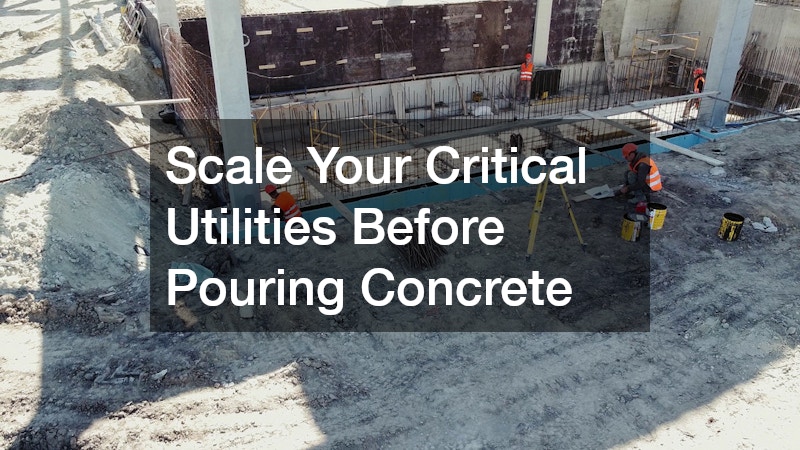
The most expensive mistakes in a facility expansion happen hidden behind walls or buried under concrete. Before you close up the framing or pour the final slab for your new addition, you must ensure your utilities are scaled to handle the demands of your larger business.
Future-Proof Your Power Grid and Data Cabling
Expanding your footprint means adding workstations, manufacturing equipment, server racks, or heavy machinery. Simply tapping into your existing electrical panels is rarely sufficient and can be incredibly dangerous. Overloading old breaker panels can lead to frequent outages, damaged equipment, and severe fire risks.
A licensed commercial electrician must map out your conduit lines, calculate the necessary load upgrades for three-phase power, and pull all the required municipal permits long before the drywall goes up. They will need to evaluate whether your current utility drop from the street is sufficient or if the power company needs to run a new, higher-capacity line to your building. Furthermore, planning your low-voltage data cabling alongside your high-voltage power ensures your expanded office or warehouse will have reliable internet and internal network connectivity from day one.
-
Audit your current power usage: Understand your baseline electrical draw before calculating the needs of the new space.
-
Install dedicated circuits for heavy machinery: Prevent localized power surges by giving specialized equipment its own power supply.
-
Integrate smart lighting and sensors: Use the expansion as an opportunity to install motion-sensor LED lighting to reduce long-term energy consumption.
Reroute Water and Waste Lines for Maximum Efficiency
Just as electrical needs scale with square footage, so do plumbing requirements. Whether you are adding new employee restrooms, breakroom sinks, emergency eye-wash stations, or industrial floor drains, plumbing is incredibly difficult and costly to relocate once the concrete is poured.
There are strict legal requirements for adding plumbing fixtures when you increase the occupancy load of a building. During the bidding process, there is a specific checklist of questions to ask commercial plumbers to ensure they understand the scope. You must inquire about their experience with maintaining adequate water pressure across a larger footprint, installing and venting industrial grease traps if food service is involved, and strictly adhering to ADA-compliant fixture heights and clearances in all new restrooms.
Maximize Curb Appeal and Ensure ADA Accessibility

An expansion is not just about the interior of the building; the exterior environment must evolve to support the new scale of your operations. A larger building naturally requires a larger, safer, and more navigable exterior space for both vehicles and pedestrians.
Design Safe Pedestrian Pathways and Delivery Lanes
As your workforce and customer base grow, your parking lot can quickly become a hazardous bottleneck. The logistics of a well-designed exterior require separating heavy truck delivery traffic from employee and customer parking areas. Mixing passenger vehicles with semi-trucks is a recipe for accidents and liability.
You must design clear, well-lit pathways that allow pedestrians to walk safely from their vehicles to the building entrances without crossing active delivery lanes. This might involve creating dedicated walkways, installing physical bollards to protect storefronts, and updating exterior lighting to eliminate dark corners in the expanded lot.
-
Conduct a traffic flow analysis: Map out the logical entry and exit points for different types of vehicles.
-
Install clear directional signage: Help visitors navigate the new layout easily to prevent confusion and traffic jams.
-
Upgrade exterior illumination: Ensure the expanded parking areas and new entrances are brightly lit for security and safety.
Meet Zoning Requirements for Exterior Drainage and Striping
Municipalities have strict rules regarding how much impermeable surface a single property can have. When you expand your building and your parking lot, you significantly alter how rainwater runs off your property. You may be required to install retention ponds or specialized drainage systems to prevent flooding your neighbors or overwhelming city storm drains.
Navigating these local rules is complex, which highlights the incredible return on investment of contracting professional commercial paving services to handle the exterior hardscaping. They will grade the lot properly to ensure water flows away from your new foundation, pour the reinforced concrete loading pads required to support stationary trailers, and stripe the asphalt to meet exact legal codes, including calculating the precise ratio of required handicap-accessible parking spaces.
Finalize High-Durability Interiors and Prepare for Move-In Day
With the structure built, the roof sealed, the utilities running, and the exterior paved, the final phase of your expansion focuses on making the interior functional, durable, and ready for your team to occupy.
Choose Low-Maintenance, High-Impact Flooring Solutions
The flooring you choose for your new space will endure significant wear and tear. Whether you are expanding a high-traffic retail floor, a busy office environment, or a heavy-duty warehouse, standard residential flooring will fail quickly under commercial conditions. You need a surface that can withstand foot traffic, rolling carts, and heavy equipment like forklifts without requiring constant repair.
Many facility managers are looking closely at the cost-to-lifespan benefits of utilizing concrete polishing services to finish their floors. This process hardens the existing slab, creating a sleek, slip-resistant surface that is incredibly easy to maintain. It eliminates the need for peeling epoxies or cracking tiles, providing a durable foundation that resists chemical spills and heavy impacts while offering a clean, professional aesthetic.
-
Evaluate the specific use-case of each zone: A warehouse floor requires different slip resistance and impact durability than a customer-facing showroom.
-
Consider lifecycle maintenance costs: Cheaper flooring materials often end up costing more in the long run due to frequent replacement and high maintenance requirements.
-
Factor in ambient lighting: Highly reflective floors can actually reduce your electrical costs by bouncing overhead light deeper into the space.
Eliminate Hazardous Post-Construction Dust and Debris
The final step before officially opening your new doors is perhaps the most crucial for the health and safety of your workforce: the cleanup. A major expansion generates a massive amount of hidden debris. Silica dust from concrete work, sawdust, drywall particles, and chemical residues settle into every crevice, duct, and light fixture.
Moving employees into a space that has not been properly remediated can lead to respiratory issues, damaged computer equipment, and ruined inventory. There is a vast difference between standard daily janitorial work and the deep remediation required after construction. You must hire a specialized post-construction commercial cleaning business that possesses the industrial HEPA vacuums, specialized solvents, and high-reach equipment necessary to safely extract hazardous particulates from the HVAC systems, rafters, and carpets, ensuring the environment is completely pristine and safe for daily operations.
Conclusion
Successfully executing a physical business expansion is a highly choreographed dance that requires precision, patience, and the right team. While it may be tempting to cut corners or rely on generalists to manage the entire scope of work, the long-term success of your facility depends heavily on specialized trades working together seamlessly. Every phase, from structural reinforcements to final utility hookups, demands specific expertise to ensure compliance, safety, and durability.
As you move forward, prioritize thorough vetting. Always verify that every contractor you bring onto the site carries proper commercial licensing, robust bonding, and adequate liability insurance to protect your growing enterprise. The best way to begin this journey is not by swinging a hammer, but by auditing your current operational bottlenecks and reaching out to a qualified project manager or architect. By sketching out a clear, strategic vision first, you lay the groundwork for a facility that will support your business’s growth for decades to come.